Memory Fragments

Updated: May 25
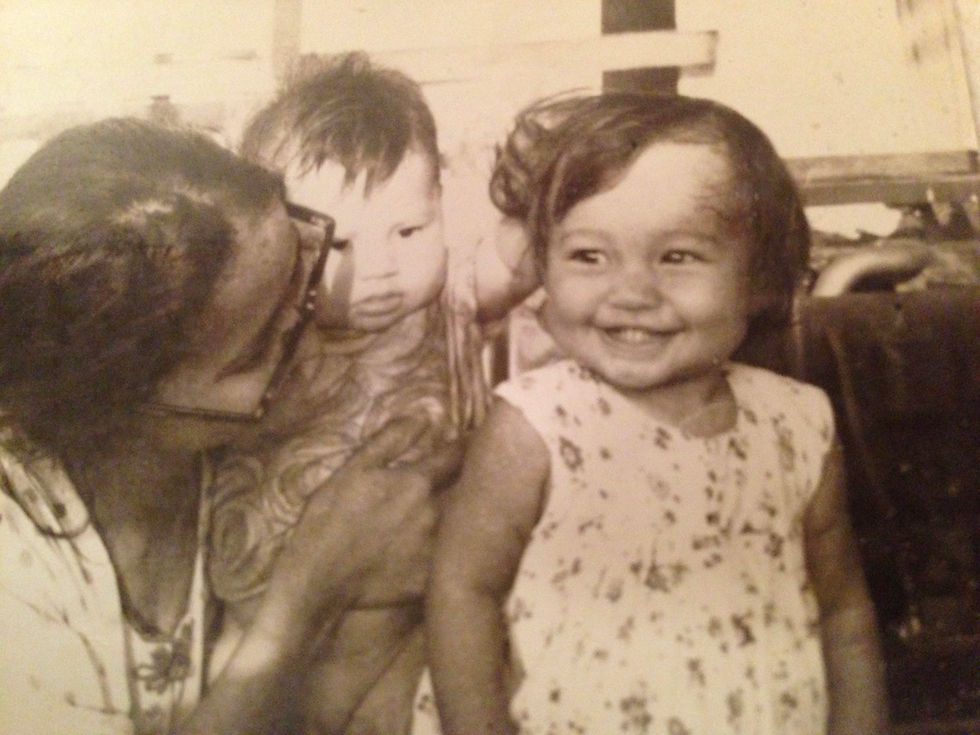
It was sometime after midnight on April 30, 1975 and long before dawn in Sài Gòn.
I was four and a half years old. My brother was three and a half. My sister, only six months old. My mom, still only 25 and already the strongest person I know, would turn 26 the next day.
I remember dinner that night: rice with scallions and oil. I remember playing on a hammock before being awakened in the middle of the night. I remember trying to carry my father’s military uniform out of the house, only to leave it behind on a bench because it was too heavy.
My mother carried my six-month-old sister and told me to take my brother to the boat. I remember holding his hand as we walked through what felt like a sea of people moving in the middle of the night, but the sky was red. At the time, I did not understand that the glow came from bombs in the distance. My mother followed behind us.
I remember the small boat. Then another memory: being lifted by a cargo net onto a larger ship crowded with people. I remember sitting inside the ship while my mother handed me food.
Later came an island I would eventually learn was Guam, followed by the long journey onward: air sickness on the flight to Hawai‘i, playing marbles at Indiantown Gap refugee camp, and standing at a bus station waiting to travel to Brooklyn. My mother later told me that we had little more than a garbage bag of clothes, and that strangers handed our family money along the way.
Eventually, a sponsor family brought us to Carroll Gardens in Brooklyn.
And each time I return home, as the plane descends into Việt Nam, I reflect about how differently life might have turned out if we had never left. These memories remain only in fragments, but they have shaped everything that came after.
As I grew older, I began to understand that children experience war long before they understand politics. They remember the feeling of fear, the confusion in adults' faces, the urgency in a parent's voice, the instinct to hold someone's had and not let go.
Perhaps that is why images of displaced children still affect me so deeply today, whether in Gaza or elsehwere in the world. Childhood memories formed during conflict do not disappear when the war ends. They remain quietly embedded in ordinary things: food, noise, crowds, departures, and the fragile relief of arriving somewhere safe.
Even now, I sometimes think about how differently my parents understood food after leaving Việt Nam. Waste was and remains unthinkable. Scarcity leaves a long shadow, even decades later.
The photographs below are fragments of the family history carried across generations: two grandfathers lost to war and hardship, one to cholera in the 1950s, another abducted and killed during the conflict under circumstances too brutal for his family to ever forget. Alongside them are the faces of those who survived and carried their memory forward.


Comments